
Slew rings don’t usually fail overnight – what happens is often slower and much less obvious.
A bit of play here, a slightly different feel when rotating, maybe a knock that wasn’t there before… these things are easy to ignore at first, but they can become a real problem if left unchecked over time.
That’s why regular measurement is key to identifying any defects with slew ring bearings in mobile elevating work platforms (MEWP) and other types of machinery that use them.
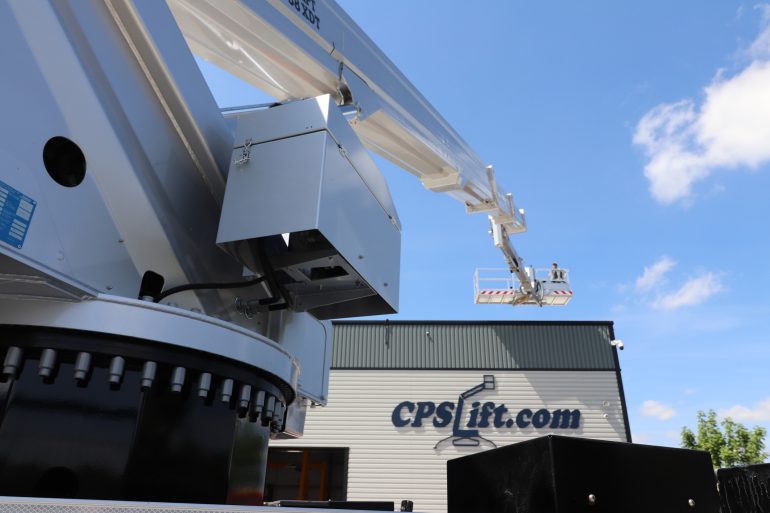
What’s Measured & Why it Matters
On any MEWP or access platform with rotation, the slew ring (or slew ring bearing) takes a lot of abuse.
Continuous rotation, load changes, shock loading and environmental exposure all have an impact on the slew ring. Over time, wear is inevitable. The key question isn’t “if” or “when”, it’s “how much has it changed by?”
Measurements and visual checks should be performed to understand the following:
- Internal clearance
- Vertical movement (axial play)
- Any irregular movement through rotation
This is all about knowing when wear has crossed into risk, but there isn’t a magic number to check against, and this is what catches people out.
Acceptable Slew Ring Wear
So, without a universal tolerance to work to, what can be classed as acceptable slew ring wear?
Firstly, the acceptable level of wear of your slew ring/bearing can depend on several factors including:
- Manufacturer design
- Bearing size and type
- Machine weight and load characteristics
- Intended working envelope
In other words, what’s fine on one model could be out of spec on another. That’s why, in practice, measurements nearly always come back to manufacturer guidance/recommendations.
Service manuals, technical bulletins, or direct confirmation from an official dealer/distributor should be the benchmark that you check against when determining what is and isn’t acceptable.
How Wear Typically Shows Up
Before measurement identifies a failing slew ring, there are usually subtle signs that something isn’t quite right.
Nothing dramatic, just small changes such as:
- Slight movement in the turret when starting/stopping rotation
- Knocking or clicking whilst under load
- Uneven rotation
- Visible grease contamination or leakage
It’s important to note that none of these confirm a problem on their own, but they’re often what triggers a proper check outside of routine testing/inspections.
Taking The Measurement Properly
There’s no shortcut here as accuracy and consistency are key to taking a proper measurement.
Firstly, you should check the manufacturers guidelines on how to measure slew ring wear on your particular model of MEWP. Typically, you’re looking at:
- Dial gauge readings
- Measurements taken at set positions
- Load applied in a controlled way
The important bit isn’t just the number – it’s how repeatable and consistent the reading is. A single measurement, taken once, doesn’t tell you much, but patterns do.
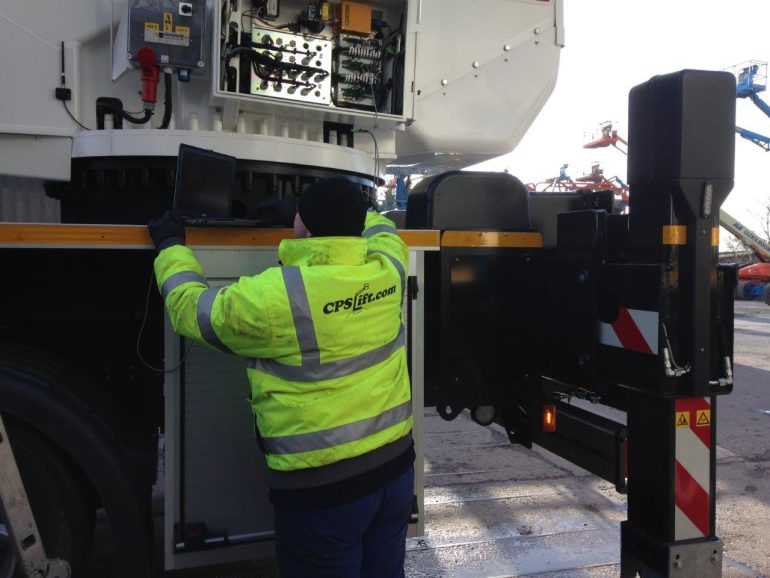
The tool used to measure slew ring wear is known as a DTI (Dial Test Indicator). It’s used to accurately measure movement and play within the bearing under controlled load conditions. Your LOLER Testing & Thorough Examinations provider should take this measurement during testing.
Interpreting The Result
Once you’ve got your figures, it comes down to comparison.
Broadly speaking, results fall into three categories:
- Within tolerance
- Approaching limits
- Beyond recommended limits
If within tolerance, you can usually carry on as usual, providing the rest of your access equipment is safe working order.
Approaching limits means you should monitor more closely and schedule a slew ring replacement in advance of failure.
If beyond the recommended limits, the equipment would no longer be considered safe for use and continuing to use the equipment may breach LOLER and PUWER requirements. This is when you should act urgently and request a slew ring repair or replacement from your chosen service partner.
And again – these limits aren’t guesswork. They’re defined by the equipment manufacturer for each specific model of machine, so always check the official documentation.
What Happens if You Ignore It?
There’s always a temptation to stretch a worn slew ring a little further due to replacement costs, downtime and other factors.
You might think “If the machine still works, still rotates, still passes a basic check, why rush?”, but the issue here is what sits behind the slew ring.
When wear increases:
- Load distribution becomes uneven
- Internal components degrade faster
- Shock forces aren’t absorbed as intended
Left long enough and you’re no longer talking about just a replacement of the slew ring, you’re risking other things like structural damage and gear wear which are much more expensive secondary failures. This is where costs escalate quickly.
IMPORTANT: A slew ring with excessive wear can lead to catastrophic failure. This can be caused by operator abuse such as overloading or shock loading, lack of maintenance, improper maintenance and neglect. A catastrophic failure is likely to lead to death or serious injury to the operator and/or persons in the local vicinity.
Repair vs Replacement
In most cases, it’s not a repair job – it’s a full replacement of the slew ring bearing.
Slew rings are built as sealed, precision components. Once they’re worn beyond tolerance, swapping them out is the most practical and safest course of action.
This does however come with its own considerations:
- Machine downtime
- Where to have the work done
- How much the replacement will cost
It’s not a small job, but it’s a controlled one, provided it’s planned properly and therefore planning ahead makes all the difference.
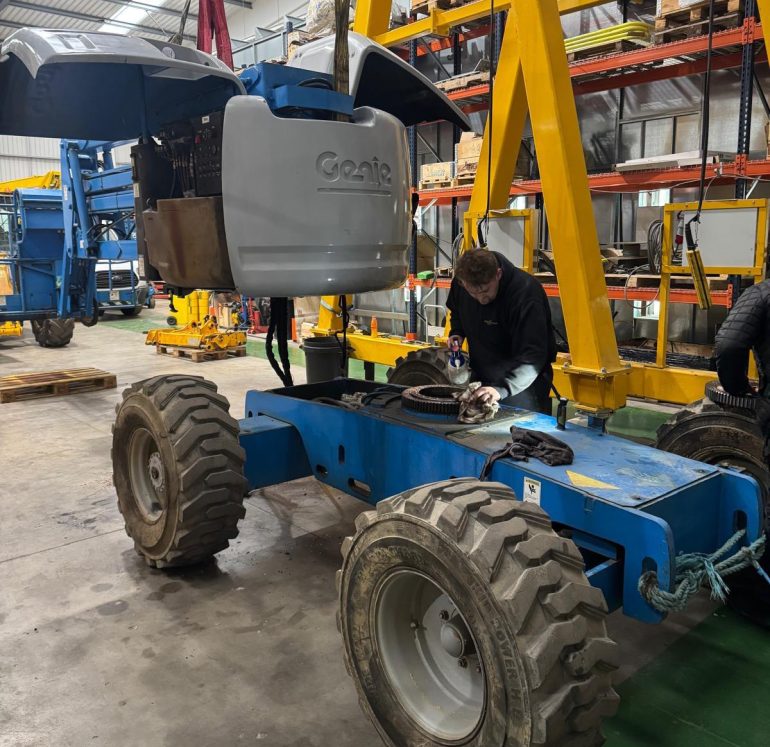
The best outcomes tend to come from early action, and that’s why we notify customers of their slew ring bearing measurement reading when we carry out LOLER Testing & Thorough Examinations of MEWP and access equipment.
We are also in the unique position of being able to offer slew ring replacements as part of our major repairs offering, so you outsource the entire inspection and replacement service to us.
The Practical Takeaway
Slew ring wear isn’t something you judge by feel alone. Measurements give you a clear picture, but only when they’re taken properly and compared against the right reference point. And in almost every case, that reference point is the manufacturer’s own specification for the machine in question.
There’s no universal pass or fail figure, just a simple process of; measure, compare, decide, and act. Get this right, and you’ll always stay ahead of the problem instead of chasing it.
If you’re concerned about your slew ring and would like to discuss your options, our team of professionals are always on hand to discuss this with you. Simply get in touch for a quick chat.
Our Blog